Why September is the real starting line for student recruitment
Our appointment by Kendal College is a timely reminder that the next recruitment cycle starts now.
Read more
They’ve grown up with smartphones, streaming, algorithms, creators and increasingly, artificial intelligence. And they’re becoming your prospective students.
Generation Alpha is moving through secondary education, which means education marketers need to start thinking seriously about how the expectations and behaviours of this generation could reshape student recruitment.
But this isn’t about throwing out everything we know and chasing the latest platform.
It’s about understanding what’s changing – and what’s not.
There’s no universally agreed cut-off for generational labels, but Gen Alpha is generally used to describe children born from the early 2010s onwards.
That means the oldest members are now entering the age at which they begin making important decisions about GCSEs, sixth forms, colleges, UTCs and their future careers.
For education marketers, Gen Alpha isn’t a future audience. They’re arriving now.

Previous generations adopted digital. Gen Alpha has simply grown up with it.
Ofcom’s latest research shows how deeply online behaviour is embedded in children’s lives, tracking the websites and apps used by UK children across smartphones, tablets and computers. YouTube remains particularly important: children aged 4–15 are its largest audience group. Source: ofcom.org.uk
For institutions, this means the distinction between a “digital campaign” and the rest of the student experience is becoming increasingly artificial.
Your social content, website, search results, video, emails and physical Open Event are all part of the same brand experience.
If one feels completely disconnected from another, students notice.
This is perhaps the biggest difference education marketers need to understand.AI isn’t something Gen Alpha will eventually discover. It’s already part of their lives.
Ofcom’s 2026 research found 86% of children aged 8–17 are aware of AI tools such as ChatGPT, Copilot or Gemini, while 56% have already used them. Among 16–17-year-olds, usage rises to 66%. Source: ofcom.org.uk
That’s significant. Students are increasingly able to ask questions conversationally, generate summaries and access information in ways previous cohorts couldn’t.
Institutions therefore need to think beyond how they rank on Google.
Is your information clear? Structured? Current? Easy for both people and AI-powered tools to understand?
The fundamentals of good content are becoming even more important.

Young audiences have almost unlimited content competing for their attention. That doesn’t mean every education institution needs to start chasing TikTok trends.
It means communications need to earn their place.
Generic stock photography, lengthy institutional messaging and interchangeable claims about “excellence” or “supportive environments” will struggle when placed alongside content specifically designed to entertain, inform or provoke curiosity.
Be clear. Be useful. Be distinctive. And get to the point.

Short-form video, student-generated content, behind-the-scenes material and authentic stories can help prospective students picture themselves within an institution.
That’s far more powerful than simply telling them they will “thrive”.
When channels fragment, distinctiveness becomes increasingly important.
If prospective students encounter your institution through search, social media, video, outdoor advertising, an Open Event and email, they should immediately recognise that each interaction comes from the same place.
That means consistent visual assets, tone of voice, messages and positioning.
We’ve seen this repeatedly in education marketing.
Ron Dearing UTC’s #GetTheEdge proposition helped give a brand-new education model a clear and recognisable identity, while campaigns for institutions including City of Wolverhampton College have used distinctive visual assets to strengthen recognition within highly competitive recruitment markets.
Technology changes quickly. Strong brands endure.

This is where marketers need to avoid getting carried away with generational labels. Young people’s media habits may change dramatically, but major education decisions rarely happen in isolation.
UCAS research continues to show the influence of families in the transition into higher education. Its 2025 applicant research found that family members remained one of the ways students first discovered their chosen university, alongside digital sources, local awareness, students and alumni. Source: UCAS
The message for marketers is simple.
You need to communicate with the young person making the decision and the people helping them make it.
Those audiences may need different messages, evidence and channels.

Being digitally native doesn’t mean wanting to experience everything through a screen. For education, the physical visit remains incredibly powerful.
An Open Event allows prospective students to walk through the building, experience the facilities, meet teachers, speak to existing students and decide whether they can picture themselves there.
Digital marketing should therefore help drive the physical experience, not attempt to replace it.

Gen Alpha is growing up with feeds, recommendations and experiences shaped around individual interests. A one-size-fits-all recruitment journey will increasingly feel outdated.
An aspiring engineer shouldn’t necessarily receive the same communications as someone interested in healthcare or creative arts. Institutions don’t need an impossibly complicated marketing stack to improve this.
Start with better segmentation; Course interests. Location. Age. Stage in the recruitment journey. Open Event attendance. Previous engagement.
Then use that insight to make communications more relevant.

This generation has grown up surrounded by sponsored content, creators, filters and increasingly sophisticated AI-generated media. They aren’t necessarily immune to marketing.
But they are developing different ways of interpreting it.
That makes authenticity incredibly valuable.

Perhaps this is the most important point. “Gen Alpha” is useful shorthand for understanding broad shifts in behaviour.
It isn’t a marketing strategy.
Not every 14-year-old behaves identically. Geography, family, interests, aspirations, socioeconomic circumstances, educational experience and personality still matter enormously.
The opportunity isn’t to create a Gen Alpha campaign. It’s to use better audience insight to understand the young people you’re actually trying to reach.
The platforms will continue changing. AI will evolve. New formats will emerge. But the fundamentals of successful education marketing remain surprisingly consistent.
And keep building the relationship until they’re ready to make their decision.
Gen Alpha might be changing how institutions need to communicate. But great education marketing still starts with understanding people.
Ready to connect with the next generation?
Let’s explore how your education marketing can evolve with your future students.
Let’s talk education marketing


Our appointment by Kendal College is a timely reminder that the next recruitment cycle starts now.
Read more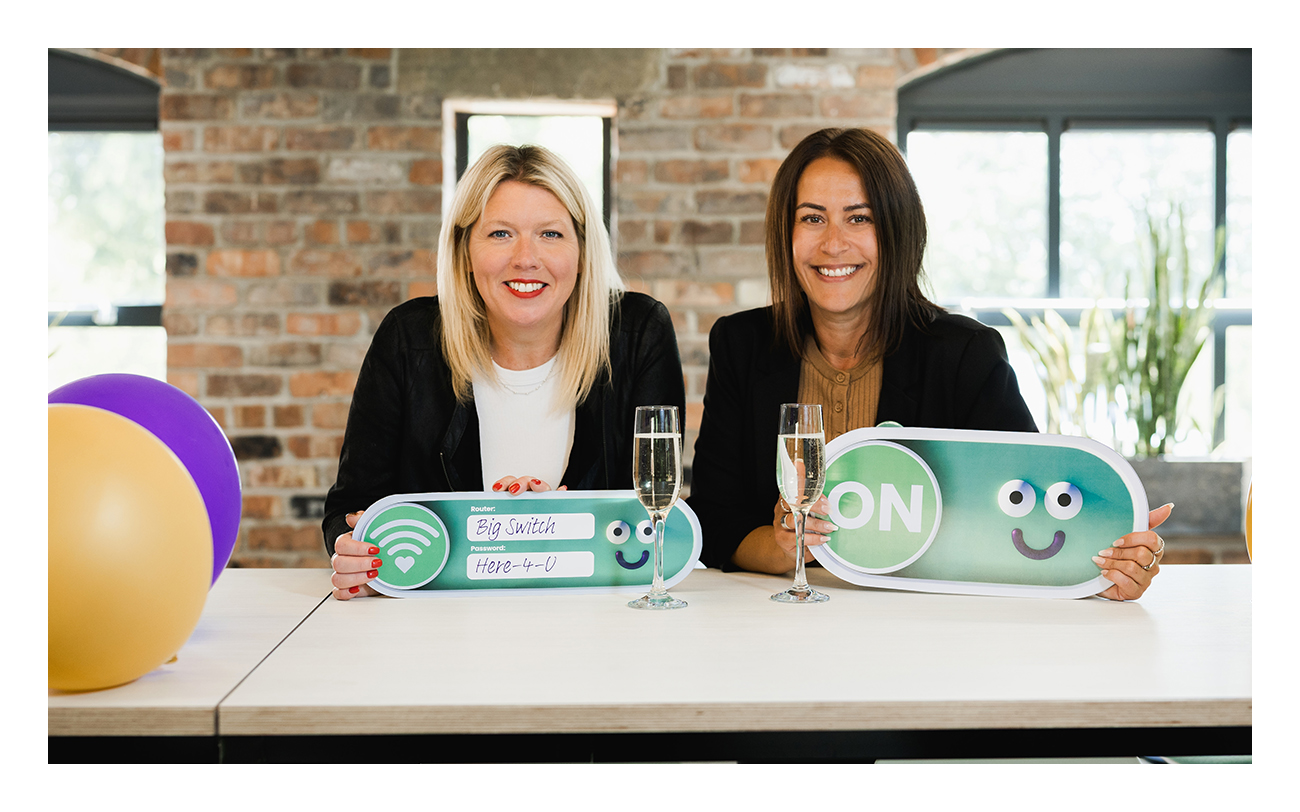
Record growth: Our rural broadband client Quickline has achieved some of the strongest results in its history.
Read more