Why September is the real starting line for student recruitment
Our appointment by Kendal College is a timely reminder that the next recruitment cycle starts now.
Read more
From face-to-face services and nicotine replacement therapy to digital tools and increasingly personalised interventions, there are more ways to help people quit than ever before.
Local Stop Smoking Services continue to provide one-to-one and group support through trained professionals, while the latest national data allows commissioners to understand service use across different population groups at national, regional and local authority level.
But having support available doesn’t automatically mean people will use it.
For commissioners and public health teams, one of the biggest challenges is making sure the people who could benefit know that support exists, understand what’s available and trust the service enough to take that first step.
That’s where communication becomes part of the intervention itself.

A service can be clinically excellent, accessible and free at the point of use.
But if the people it’s designed for don’t know about it – or don’t believe it’s relevant to them – that service has an awareness problem.
This is particularly important when trying to reach groups with higher smoking prevalence or communities that have traditionally been harder to engage.
The latest OHID Stop Smoking Service Data Explorer has been developed specifically to help commissioners understand smoking prevalence and the use and experience of local authority-funded services among different population groups.
The data is becoming more sophisticated. The communications need to be too.
Marketing can’t replace good service provision. But good service provision can’t deliver its full potential if the people who need it don’t know it’s there.
Healthcare organisations naturally understand their services in detail.
The public doesn’t. People aren’t necessarily thinking about pathways, interventions or nicotine replacement options. They’re thinking:
Effective behaviour-change communications start there.
Understand the barriers, motivations and lived experiences of the people you’re trying to reach before deciding what you want to say to them.

Public health campaigns deal with statistics every day. But statistics aren’t always what motivates an individual to act. People connect with people.
When we developed the winter campaign for Smokefree Liverpool, real service users were deliberately placed at the heart of the creative. Their experiences were captured through photography and film, with personal stories designed to make quitting feel achievable rather than abstract.
The aim wasn’t to lecture people about smoking. It was to help them see themselves in somebody else’s success. That distinction matters.
Behaviour-change marketing shouldn’t simply tell people what they should do. It needs to understand what might help them believe they can do it.
Behaviour change isn’t one-size-fits-all.
Age, gender, geography, occupation, previous attempts to quit and individual motivations can all influence how somebody responds.
The Smokefree Liverpool campaign initially had a particular focus on older white males, especially those in manual employment or unemployed, alongside priority communities in areas of higher deprivation.
Digital activity allowed audiences to be segmented by age, gender and location, with campaign performance monitored and creative adapted as the work progressed.
And that produced useful insight.
When more relevant creative was introduced for younger audiences, click-through rates amongst that demographic increased from 0.94% to 1.50%.
The lesson? Don’t simply identify an audience. Learn from them.
That’s also why access to detailed local data matters. The OHID data explorer now allows commissioners to analyse smoking prevalence and service use across population groups rather than treating smokers as one homogeneous audience.

A public health campaign shouldn’t rely on people actively searching for support. Sometimes you need to put the message into their everyday lives.
For Smokefree Liverpool, that meant combining targeted Facebook, Instagram and Google advertising with outdoor media across the city.
Bus shelters. Supermarket screens. Taxi advertising. Buses. City-centre digital screens. And a prominent digital billboard outside Liverpool FC.
The campaign ultimately generated more than 25.4 million opportunities to see across outdoor and digital activity.
That’s not about choosing digital or traditional media.
It’s about understanding where your audience is most likely to notice, remember and act on the message.
Awareness is only useful if people know what to do next.
Healthcare communications can quickly become overloaded with information, telephone numbers, web addresses and instructions.
Resist the temptation. Make the next step obvious. And remember that different people will prefer different routes.
The Smokefree Liverpool campaign incorporated telephone, text, website and QR-code calls to action rather than relying on a single response mechanism. During the campaign period alone, 120 texts were received through the SMS call to action.
Removing even small points of friction can matter when you’re asking someone to make a significant behavioural change.

Public health communications are often delivered in bursts.
Stoptober. New Year. No Smoking Day.
But behaviour change doesn’t conveniently happen within campaign dates.
Consistent branding, messages and visibility can build familiarity over time, making a service easier to recognise when someone eventually becomes ready to act.
That’s particularly important with smoking cessation, where somebody may see a message several times before deciding: Today’s the day.
Campaigns should therefore build the service brand as well as deliver the immediate call to action.
A trusted, recognisable service has value beyond the lifespan of an individual campaign.
Reach matters. Clicks matter. Engagement matters. But ultimately, behaviour-change marketing should be judged on what people do next.
For Smokefree Liverpool, the campaign delivered:
Male referrals also increased 33.5% year on year, an important result given the campaign’s priority audiences.
Those are the numbers that turn a communications campaign into a public health story.
And they’re precisely the types of measures that matter. National Stop Smoking Service reporting tracks quit dates and successful quits at four-week follow-up alongside demographic and treatment data.
Sometimes. But awareness alone isn’t enough either. People need to notice a service. Understand it. Trust it. See its relevance to them.
And know exactly what to do next.
The future of effective smokefree communications isn’t simply about shouting louder about the support available. It’s about using data, audience insight, distinctive creative and carefully planned communications to make that support feel relevant and accessible to the people who need it.
Because delivering support is only half the challenge.
Helping people take the first step towards it is the other.
Let’s explore how audience insight, creative communications and targeted campaigns can help turn awareness into action.
Let’s talk healthcare marketing


Our appointment by Kendal College is a timely reminder that the next recruitment cycle starts now.
Read more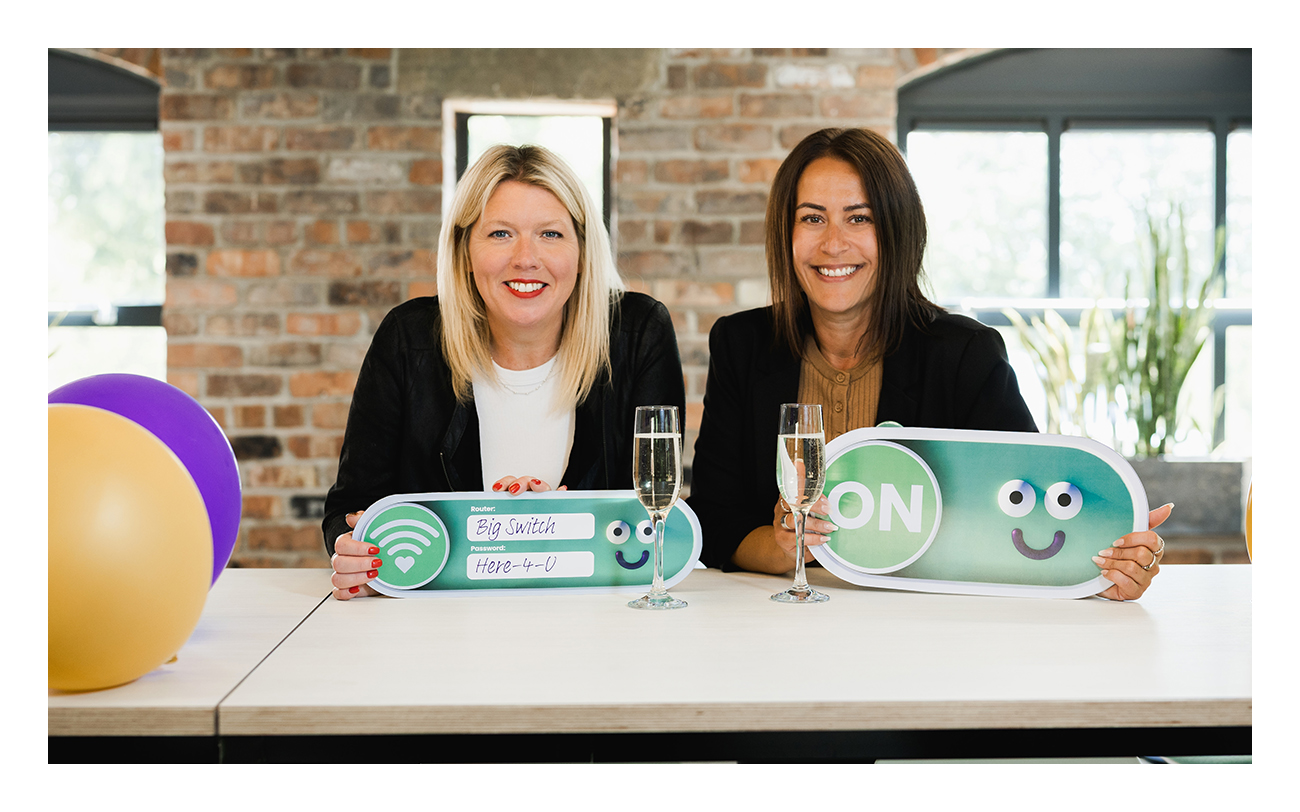
Record growth: Our rural broadband client Quickline has achieved some of the strongest results in its history.
Read more